2015 Honda Fit · US · Fluid readings
Inspect the coolant reservoir
Observe the reserve-tank level without opening a pressurized cooling cap.
1 Confirm your vehicle
For 2015 Honda Fit · US, 1.5L gasoline. Confirm the original component against the cited manual.
Select and confirm your vehicle before starting.
Help identify your model and equipmentWhat is excluded?
- Other model years and markets; imported Jazz or Fit Hybrid; modified or aftermarket components with a different procedure.
2 Prepare
You can save preparation while your vehicle or equipment is still unconfirmed.
YOUR OBSERVATIONS
Keep the before and after.
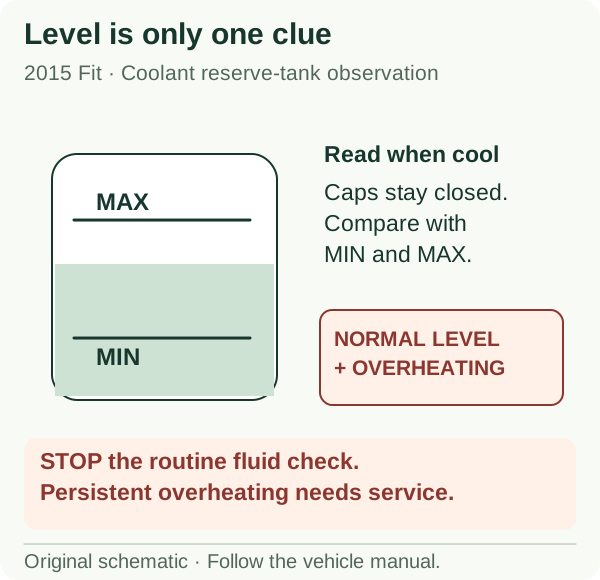
Keep the cold MIN/MAX observation separate from temperature symptoms and previous additions.
At a later fully cold check, has the level changed; has overheating or leakage occurred even if the level remains between marks?
3 Follow the steps
Confirm compatibility and choose the readiness branch before recording steps.
4 Check the result
- Which reserve-tank result is visible?
- Between MIN and MAX with no visible leak; observation recorded
- Record only the result you actually observed. A saved web checklist is not confirmation that a vehicle has been repaired.
- Are the cold level, heat-symptom history and loss history all accounted for?
- At a later fully cold check, has the level changed; has overheating or leakage occurred even if the level remains between marks?
Select what you actually observed. If you have only prepared the plan, record that instead.
Stop and get help if
- Steam, overheating, an empty tank or visible coolant leakage
- Empty reservoir, below MIN, recurrent loss, overheating or a leak: arrange cooling-system service; leave the radiator cap closed.
- A part, label, connector or fastener differs from the cited manual; access requires raising the vehicle; you cannot identify the correct component.
Source & applicability
- 2015 Honda Fit Owner’s Manual — Coolant Reserve Tank, printed pp.368–369
PDF page 370 · Source checked 2026-10-04
- 2015 Honda Fit Owner’s Manual — Overheating Follow-up, printed p.418
PDF page 420 · Source checked 2026-10-13
- 2015 Honda Fit Owner’s Manual — Cooling-System Cap Heat Warning, printed p.369
PDF page 371 · Source checked 2026-10-13
Original, AI-assisted plan based on owner-manual facts. No physical repair test or manufacturer endorsement is claimed. Content version 2.0.0.
All observation paths
Is the engine fully cool and is the reserve tank positively identified from printed page 368?
- Yes — ready for this check: Continue with the steps, stopping if the real component differs from the manual.
- Not yet / not sure: Preparation saved. Return when the condition is confirmed; leave the vehicle untouched.
- Steam, overheating, an empty tank or visible coolant leakage: Empty reservoir, below MIN, recurrent loss, overheating or a leak: arrange cooling-system service; leave the radiator cap closed.
Which reserve-tank result is visible?
- Level between MIN and MAX: Has overheating, a temperature warning, steam or repeated coolant loss occurred, even though the level may look normal?
- Below MIN, but not empty: Have you observed repeated coolant loss or accessible evidence of a leak?
- Tank is empty, leaking or engine overheated: Empty reservoir, below MIN, recurrent loss, overheating or a leak: arrange cooling-system service; leave the radiator cap closed.
- I cannot read or identify the marks: Level cannot be read. Leave caps closed and get help identifying the reserve tank and marks before making a fluid decision.
- I have only prepared the plan: Plan prepared; no physical maintenance result recorded.
Have you observed repeated coolant loss or accessible evidence of a leak?
- Repeated loss or visible leak: Empty reservoir, below MIN, recurrent loss, overheating or a leak: arrange cooling-system service; leave the radiator cap closed.
- First low observation, no visible leak: Low non-empty level identified. Prepare the owner manual’s reserve-tank top-up procedure using specified Honda Type 2 coolant; keep the radiator cap closed. If uncertain, ask a service provider.
- History is unknown: Low level with unknown history: ask a service provider to establish the level and inspect for leakage before continuing.
Are the cold level, heat-symptom history and loss history all accounted for?
- Readable normal level; no heat symptom or recurring loss: Between MIN and MAX with no visible leak; observation recorded
- The observation or repeat check is still incomplete: Plan prepared; no physical maintenance result recorded.
- Heat symptom, leak or recurring loss despite the level reading: Empty reservoir, below MIN, recurrent loss, overheating or a leak: arrange cooling-system service; leave the radiator cap closed.
Has overheating, a temperature warning, steam or repeated coolant loss occurred, even though the level may look normal?
- Yes — heat symptoms or repeated loss have occurred: Empty reservoir, below MIN, recurrent loss, overheating or a leak: arrange cooling-system service; leave the radiator cap closed.
- No heat symptom or repeated loss observed: Are the cold level, heat-symptom history and loss history all accounted for?
- The earlier symptoms or history are unknown: Plan prepared; no physical maintenance result recorded.
All observation paths
Is the engine fully cool and is the reserve tank positively identified from printed page 368?
- Yes — ready for this check: Continue with the steps, stopping if the real component differs from the manual.
- Not yet / not sure: Preparation saved. Return when the condition is confirmed; leave the vehicle untouched.
- Steam, overheating, an empty tank or visible coolant leakage: Empty reservoir, below MIN, recurrent loss, overheating or a leak: arrange cooling-system service; leave the radiator cap closed.
Which reserve-tank result is visible?
- Level between MIN and MAX: Has overheating, a temperature warning, steam or repeated coolant loss occurred, even though the level may look normal?
- Below MIN, but not empty: Have you observed repeated coolant loss or accessible evidence of a leak?
- Tank is empty, leaking or engine overheated: Empty reservoir, below MIN, recurrent loss, overheating or a leak: arrange cooling-system service; leave the radiator cap closed.
- I cannot read or identify the marks: Level cannot be read. Leave caps closed and get help identifying the reserve tank and marks before making a fluid decision.
- I have only prepared the plan: Plan prepared; no physical maintenance result recorded.
Have you observed repeated coolant loss or accessible evidence of a leak?
- Repeated loss or visible leak: Empty reservoir, below MIN, recurrent loss, overheating or a leak: arrange cooling-system service; leave the radiator cap closed.
- First low observation, no visible leak: Low non-empty level identified. Prepare the owner manual’s reserve-tank top-up procedure using specified Honda Type 2 coolant; keep the radiator cap closed. If uncertain, ask a service provider.
- History is unknown: Low level with unknown history: ask a service provider to establish the level and inspect for leakage before continuing.
Are the cold level, heat-symptom history and loss history all accounted for?
- Readable normal level; no heat symptom or recurring loss: Between MIN and MAX with no visible leak; observation recorded
- The observation or repeat check is still incomplete: Plan prepared; no physical maintenance result recorded.
- Heat symptom, leak or recurring loss despite the level reading: Empty reservoir, below MIN, recurrent loss, overheating or a leak: arrange cooling-system service; leave the radiator cap closed.
Has overheating, a temperature warning, steam or repeated coolant loss occurred, even though the level may look normal?
- Yes — heat symptoms or repeated loss have occurred: Empty reservoir, below MIN, recurrent loss, overheating or a leak: arrange cooling-system service; leave the radiator cap closed.
- No heat symptom or repeated loss observed: Are the cold level, heat-symptom history and loss history all accounted for?
- The earlier symptoms or history are unknown: Plan prepared; no physical maintenance result recorded.